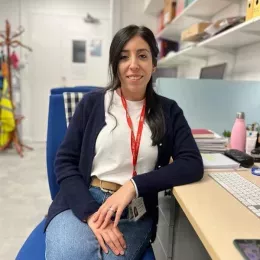
Dr. Sara El Hoss has made important contributions to the understanding of erythropoiesis and red blood cell disorders, with a particular focus on sickle cell disease. Her research has identified novel mechanisms driving ineffective erythropoiesis, demonstrating the contribution of inflammasome activation and inflammatory signalling to impaired erythroid differentiation and highlighting potential therapeutic targets. She has also contributed to advancing the understanding of erythropoietic defects in VEXAS syndrome and of the molecular pathways regulating erythroid maturation. By combining patient-derived samples with advanced cellular and molecular approaches, her work bridges fundamental discoveries with translational applications to improve the management of inherited hematological disorders.
Building on these discoveries, Dr. El Hoss currently leads several translational research programs aimed at improving our understanding of sickle cell disease and other hemoglobinopathies. Her research investigates the interplay between inflammation, hematopoietic stem cell biology, and erythropoiesis, with a particular focus on identifying innovative therapeutic strategies. She also leads one of the first comprehensive research programs exploring the impact of pregnancy on hematopoiesis and maternal–fetal adaptations in sickle cell disease. In parallel, her group studies the molecular regulation of fetal hemoglobin and erythroid differentiation, integrating patient-derived samples, advanced cellular models, and cutting-edge genomic technologies to accelerate the development of novel therapies for inherited red blood cell disorders.